The centre of Earth is believed to be 5,500 degrees Celcius which is almost as hot as the surface of the sun. Geothermal (which literally means Earth Heat) energy is energy which is taken from inside the Earth and used by us. Even a couple of miles down the temperature of the Earth can be over 200 degrees Celcius. Therefore there is an enormous amount of energy to be tapped into.
The top 15 metres of the Earth’s surface have a relatively constant temperature through all of the seasons. Therefore one of the commonest uses of geothermal energy is Geothermal Heat Pumps. Pipes buried into the ground circulate fluid through the warm ground extracting energy and using it to heat buildings very efficiently. In the summer heat from buildings can be transfered back into the ground by the same process cooling the building. Geothermal heat pumps can be used almost everywhere on the Earth’s surface. Often used in agriculture to heat greenhouses, geothermal heat pumps cut electricity bills by up to 80%.
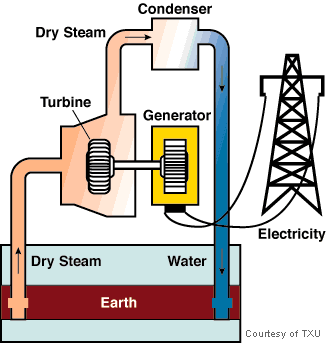
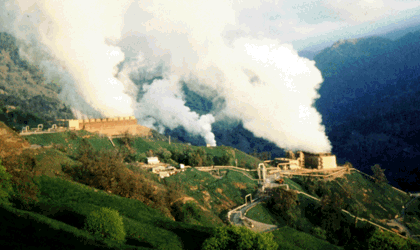
Geothermal heat can also be used directly in volcanic locations around the world. For example, in Iceland water is heated by being pumped down into the ground and back up again. In those locations with extreme geothermal heat close to the surface (e.g. natural hot springs) it is even possible to generate electricity using turbines driven by the steam to power generators. Geothermal power stations are very clean emitting only steam and a few trace gases, and they take up very little space compared to fossil fuel power stations.
Comments
It is said [above] that in Iceland, we pump cold water into the ground “For example, in Iceland water is heated by being pumped down into the ground and back up again.” This was done for a few years using the temperature in a new lava field in Vestmannaeyjar (see here), but the lava cools down rather fast so this was only possible for a few years. On the other hand, we use two sources for hot water here in Iceland, for space heating, electricity production, greenhouse farming etc. In some areas we can pump hot water directly from the ground, from holes we drill down to 1,500 to 3,000 metres. The water in low temperature areas is from 40 to 120°C. In high temperature areas, we get steam from boreholes, and the temperature is up to 320°C. We generate electricity from the steam and also use the steam to heat up cold water to 83-85°C. This water is then used for space heating. 90% of all houses in Iceland are heated with hot water that either comes directly from the ground or from geothermal powerplants. For further information, look here.
Sigurjón
June 4th 2010