

Solar Power Station in Space
Solar Power Station In Space
Plans are afoot to build a solar power station in space to beam energy down to Earth
home > solar | news
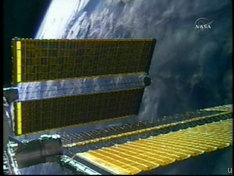
It has been announced that startup company Solaren Corp have reached an agreement to supply California with electricity generated by PV solar panels located in space. The agreement with US power company Pacific Gas and Electric Company is for Solaren to supply 200MW of space based solar power (SBSP) starting in 2016 from a photovoltaic solar array they plan to launch into orbit.
Solar power has a major disadvantage compared to traditional forms of electricity generation (coal, gas, nuclear etc) - the sun does not shine at night and cloud cover can prevent or limit generation during the day. A solar power station in a suitable orbit around the Earth (200+ miles above the surface) can generate electricity 24 hours per day, every day of the year. As an added benefit, in space there is no atmosphere to reduce the energy of the sun's rays, and so 6-10 times as much energy falls on the solar panels than would if they were located on the earth's surface.
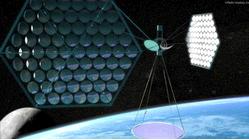
The power generated by the space based solar farm will be beamed down to earth using radio waves (microwaves) - supposedly with lower losses than those in standard transmission cables. Click here to view the Wikipedia article on Microwave Power Transmission which explains this technology in some detail). With the solar panels located in space, and only a (relatively) small radio receiver on earth, the amount of land required for the solar power station will be much lower than would be the case with solar panels mounted on the earth.
The Costs and Future of Space Based Solar Power
With the cost of launching a rocket into space being so expensive, this idea would not be economically viable today, but the rapid commercialisation of space and independent (rather than state owned) launching systems will see these prices tumble over the next few years potentially making the figures add up.Time will tell if Solaren Corp will be able to obtain the necessary financial backing to make this project a reality. With the costs likely to be in the billions rather than hundreds of millions of dollars, it could prove very difficult in the current economic climate. All of the necessary technology is already well understood, so this will be a financial rather than engineering problem to resolve.
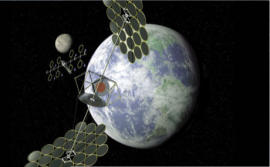
NEW Note that there is also another company Space Energy proposing a similar project. Click here to view their guide to How SBSP Will Work.
 Article Last Modified: 22:21, 24th Sep 2014
Comment on this Article
If you have any comments on this article, please email them to neil@reuk.co.uk.Related Articles and Products
More from the REUK.co.uk website:| Heat Transfer Fluid in Solar Water Heating Find out more about selecting heat transfer fluids for solar water heating systems  | Diodes and Solar Panels Why are solar panels connected to batteries through a diode? 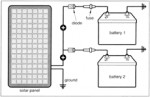 | Molten Salt for Heat Storage Find out about how molten salt can be used as a heat store 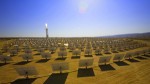 | SunGuard 4.5A Solar Charge Controller Find out more about the Sun Guard 4.5A solar charge controller for small solar power systems 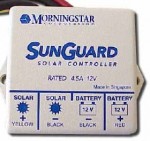 |
| How Do PV Solar Panels Work Find out how photovoltaic solar cells generate electricity  | Freeloader Pro Introduction to the new Freeloader Pro - the ultimate professional solar charger  | Solar Bread Box Batch Heater Find out how to put together the simplest kind of solar water pre-heater  | Concentrating Solar Voltaics Concentrate sunlight onto solar cells increasing power output.  |
solar, news.