One of the fastest ways to destroy a perfectly good pump is to let it operate dry – i.e. to leave it running when there is not enough water for it to pump.
Expensive pumps are usually fitted with a system which detects the presence of water (or lack thereof) and turns off the pump when necessary. However, small 12 volt pumps of the type often powered usingsolar energy and used for small-scale domestic irrigation and greywater management systems are usually not so equipped.
Detecting the Presense of Liquid
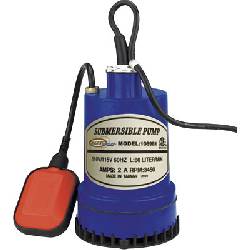
Commercial pumps with integrated auto shut off mechanism typically use a Float Switch (see image above). Such float switches can be purchased separately (for example our Float Switch available in theREUK Shop.
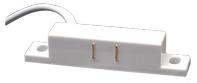
An alternative is to use a Liquid Sensor such as that pictured above. A liquid sensor allows electrical current to flow through it only when both of its contacts are submerged. Since a liquid sensor can be used in smaller containers than a typical float switch, in the rest of this article we will look at how an automatic pump shut off circuit can be put together using a liquid sensor.
DIY Automatic Pump Shut Off System
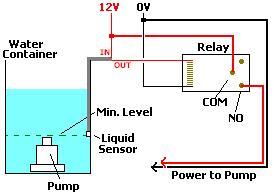
Pictured above is a schematic of a very simple automatic pump shut off system for a 12 Volt pump which uses just one liquid sensor and a relay. Since the amount of electric current that can pass through the liquid sensor is limited at under 1 Amp, the relay is used to switch on the power supply to the pump whenever its coil is energised (by the low current which passes through the liquid sensor when it is submerged).
When the liquid sensor is not submerged, the pump is switched off and the system uses no power at all. When the sensor is submerged (and the system has been switched on by the user) the relay* uses around 0.3W-0.5W of power depending on the specifications of the relay.
* Click here to purchase a 12 Volt 10 Amp Relay from the REUK Shop.
Avoiding Multiswitching
NEW Multiswitching (a switch turning on and off rapidly) can occur when a water sensor or float switch is used in turbulent water. If a water sensor or float switch is used to control a pump directly there is the risk that the pump will be damaged. Click here to view our new article Water Pump Hysteresis Circuit to find out more and to learn how to get around this problem using a simple time delay circuit.