Greywater such as used bathwater, laundry washing water, and kitchen sink water is very easy to recycle, however it must not be stored for any length of time (more than a day) without some kind of treatment. Greywater can contain bacteria, fecal matter, and will quickly develop disease-inducing pathogens if stored in a warm climate. Ideally greywater should be used immediately for watering none-edible plants in the garden, however with treatment it can be used in to flush toilets and much more.
One option is to use a sand filter to clean the water, however only a slow sand filter will remove the micro-organisms (bacteria and viruses) which turn stored greywater into a dangerous soup. A much faster and cheaper method (though less environmentally friendly) is to disinfect the greywater.
Disinfecting Greywater
Typically greywater disinfection is carried out using either chlorine or iodine. Chlorine is by far the most common since it is found in household bleach as well as being sold in solid tablets and liquid form by swimming pool suppliers. Chorine is therefore very cheap, it can be stored for a long period of time without degrading, and much of it will vapourise from the greywater after it has performed its disinfection work.
Organic material in greywater will chemically combine with chlorine reducing the amount available for disinfection – therefore a suitable water filter (ceramic, charcoal, or ceramic) should be used to block organic matter from getting into the storage/treatment vessel. The filter must be cleaned ever few weeks: washing and soaking the filter in a vinegar solution is environmentally friendly and effective.
Iodine is much more expensive and more difficult to obtain, however it combines less with organic material, is more at disinfecting strongly alkaline greywater, and it takes just a couple of minutes to kill most micro-organisms.
UV light, Ozone, and Ionic treatments can also be used to disinfect greywater, however for the rest of this article we will discuss chlorine because it is so much more accessible to the majority of people.
Chlorine Disinfection of Greywater
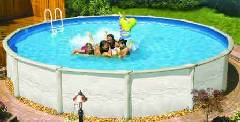
It is currently recommended that outdoor swimming pools be disinfected with between 2 and 5 mg per litre of chlorine. Above 5mg/l the chlorine starts to irritate the skin and eyes of the swimmers, however slightly higher levels are often used in greywater disinfection.
Commercially available (expensive) greywater processing systems typically introduce as much as 15 mg of chlorine to each litre of greywater, with about 5 mg per litre of free chlorine remaining after disinfection. This can be achieved at home by throwing in a couple of tablespoons of chlorine bleach for each 5 litres of greywater to be treated. For small quantities of water this is very quick and easy, however a typical UK bather uses 75 litres of water corresponding to 30 tablespoons (or half a litre!) of bleach.
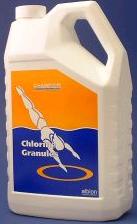
Rather than using bleach, chlorine granules or tablets should be used for large scale greywater disinfection and storage. (Chlorine granules are available from swimming pool suppliers from around£25 for 5kg.) The recommended dosage for pools and spas is 125g per 100 cubic metres (2oz per 10,000 gallons) of water, therefore for a typical UK bath (75 litres = 0.075 cubic metres) just 0.1g is required to give the used bathwater a chlorine concentration of 2 mg/litre. Adding more would increase the concentration.
Chlorine Treated Greywater and the Garden
Chlorine is toxic to garden plants. When chlorine gets into the soil it can block normal metabolic processes acting as a substitute for similar nutrients. If greywater is used responsibly for irrigation, disinfection is not essential. Human bacteria are not harmful to plants, so as long as the greywater is used in a way which guarantees no human contact (e.g. sub-soil irrigation), disinfection will actually have a negative effect. Whereas chlorine can be harmful to plants and bad for the soil, human-bourne bacteria will quickly die in soil without a human host.
Greywater collected for irrigation purposes should be used immediately upon collection – ideally after cooling. If you must store chlorine-treated irrigation greywater, then it should be left overnight before use in order to let as much chlorine evaporate as possible. Leaf burn is a common symptom of excess chlorine in soil, so watch out for this indicator and stop watering with chlorine-treated greywater immediately if it or any other effects are noticed.
The use of chlorine-treated greywater should be alternated with harvested rainwater (or even untreated greywater) as much as possible in order to reduce concentrations of chlorine in the soil.
Greywater for Toilet Flushing
If greywater is to be used for toilet flushing it must be disinfected. Diseases carried by untreated greywater can be transmitted by splashing, other human-contact, and cross-contamination with the main potable water supply.