Other than an electric oven or heater, the tumble drier (dryer) is one of the biggest energy hogs in most homes. With unreliable weather here in the UK, it can be impossible for days and weeks on end to hang washing outside to dry. It sometimes seems that the only way to get clothes dry is to use a tumble drier, but for most households this is not necessarily true. Not using a tumble dryer will save the average UK household £75 per year at current electricity prices, plus clothes will last much longer.
Use a Spin Dryer
In order to get clothes dry, ideally you want them to come out of the washing machine as dry as possible. Therefore running an extra spin cycle when the standard washing cycle has finished can help to get rid of another 10-20% of the water. Even better is to invest in a separate high speed spin dryer – see our article Save Electricity with a Spin Dryer – which can extract even more water out of your washing without using heat and therefore more efficiently than a tumble dryer. (Note that if you must use a tumble dryer, you can reduce electricity consumption by first putting it through a spin dryer – 2 minutes in the spin dryer can easily save 30 minutes in the tumble dryer.)
Buy a Clothes Airer
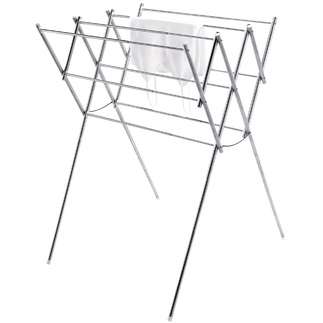
With your washing now as dry as possible, it will still be quite damp and need hanging. A wide selection of clothes airers (aka clothes horse or drying rack) are available such as the one pictured above. These can be free-standing, hung from the ceiling, or hung from radiators.
With the washing now hanging you just need to find a location where it will dry as quickly as possible, since if it takes days to get everything dry enough to put away, your next load of washing will have nowhere to go to be dried! The speed washing drys depends on the temperature and humidity of the air. A well ventilated room with direct sunlight shining in is best – ideally something like a conservatory with an openable window if you are lucky enough to have one.
When ventilation is a problem resulting in high humidity levels and therefore slow drying, one solution is to close the airer in a room (as small as possible) with a dehumidifier. This will draw the moisture from the air speeding up the drying process, and will use far less electricity overall than a tumble dryer. On average a dehumidifier will cost around £20-40 and use only 300 Watts of power (one-tenth that of a tumble dryer).
It is best not to hang washing on radiators since it can result in them rusting, reduces the efficiency of their operation, and condensation and mould growth are likely to occur in corners and behind cupboards etc in your home.
Electric clothes airers are available in which the hanging bars are themselves gently heated. The whole airer typically uses less than 100W of electricity. However these only work really well when used in a confined space with good air flow.
When only a Tumble Dryer will do
Obviously sometimes the washing will not dry fast enough, but a quick spin in the tumble dryer to finish off the wetter items will use much less electricity than if you’d just thrown the clothes straight in from the washing machine.
A condensing dryer though more expensive initially is better than the more common vented version since a condensing tumble dryer sucks in warm moist air from your home (which you’ll have paid a lot of money to heat) and blows it out of the front hotter and drier. A vented tumble drier sucks in your expensive hot air, and blows it outside!