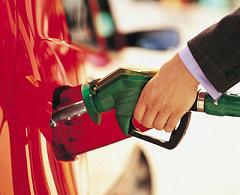
In our article Energy Efficient Driving published last year we listed some tips from the Energy Saving Trust which can save the average UK driver £120 per year in fuel costs (more at today’s prices). In this article we will look in more detail at how modifying your driving style can greatly increase fuel economy.
Keep Track of your Fuel Usage
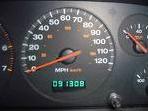
The first step in reducing your fuel use is to keep track of how much fuel you are actually using. All vehicles have an odometer (milometer) to display the total distance travelled. Every time you refuel your car, keep a record of the reading on the odometer and the amount of fuel you purchased. At frequent intervals divide your recent mileage by the volume of fuel purchased to calculate the MPG (miles per gallon) you are getting.
Never Drive Aggressively
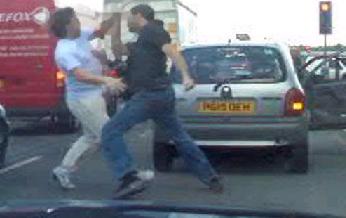
Aggressive driving has a huge impact on fuel consumption. When you drive aggressively you spend 10-25% more time applying your brakes, and therefore having to accelerate back up to speed again. Accelerating uses much more fuel than driving at a steady speed, so leave a good gap between yourself and the vehicle in front. That gives you the chance to coast a little rather than having to jump on the brakes every time the vehicle in front slows a little. Look around the vehicle in front of you to identify traffic lights and other obstructions in the distance which are likely to slow down the traffic and be ready to lift off the accelerator.
Spend as Little Time as Possible Stopped
When a car is stopped with the engine idling it is getting 0 MPG. The longer you spend not moving, the lower your overall MPG will be. It also takes a lot more fuel to get a stopped car moving and up to speed, than to accelerate a slowly moving car up to speed.
When you are see traffic lights, crossroads, roundabouts, give way and stop signs, and other obstructions up ahead, prepare to lift your foot off the accelerator. Ideally you will be able to maintain your steady speed unimpeded, but if you need to slow down, lift off the accelerator and roll along trying to keep the vehicle moving for as long as it is safe to do so. (Modern engines use no fuel when coasting in gear.)
Accelerate Slowly
To accelerate from 0-30 mph in 3 seconds takes more fuel than accelerating from 0-30 mph in 6 seconds, therefore fuel savings can be made by accelerating slowly and smoothly wherever it is safe to do so (i.e. not on the sliproad to a motorway!). If starting off down a hill, lift off the brake and let the car start to roll downhill before you put your foot on the accelerator.
Don’t Drive Above the Speed Limit
For most vehicles optimal fuel efficiency is gained between around 30 and 50 mph. Once you start driving at 80+mph fuel consumption increases enormously.
More Hypermiling Information
Hypermiler on Wikipedia.
Microtrends: Hypermiling from Times Online.