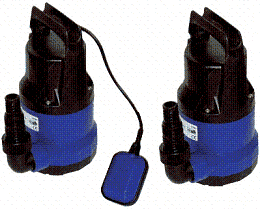
 Mains Power or Low Voltage Pumps
The first choice to make is whether to purchase a mains powered pump, or a low voltage (typically 12V) one.
Cable Size
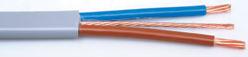
A 300W mains powered pump draws a current of below 2 Amps and so quite thin cable can be used – e.g. the cheap 5A-rated twin and earth cable used in domestic lighting circuits would be perfect. A 300W 12V pump on the other hand would draw a current of over 25 Amps and so thick cable would be required – very expensive with the price of copper where it is, particularly over long runs. (Visit our Line Losses Calculator for a rough idea of the diameter of cable required for low voltage pumps).
Pump Cost and Quality
In general a mains powered pump will cost less than an equivalent low voltage pump for all but the smallest of pumps. There are more mains powered pumps manufactured and sold than low voltage pumps which explains the difference in price, but low voltage pumps tend to be better made from higher quality materials than mains powered pumps as they are typically designed to be used in harsher conditions – e.g. outdoors and marine environments.
Float Switches
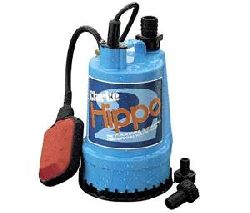
It is very useful to purchase a pump with a built in float switch. This will automatically cut the power to the pump when there is no water left to pump thereby protecting the pump from being badly damaged and/or burnt out by running dry. Mains powered pumps are more likely than low voltage pumps to come with an integrated float switch – probably because a float switch on a low voltage pump has to switch a high current necessitating either an expensive float switch or added electronics (which can go wrong!). Submersible pumps are much more likely to have integrated float switches than other pumps.
If using a pump without an integrated float switch, a suitable float switch (REUK Shop) should be fitted to the water tank above the pump inlet to protect the pump. This will add to the cost and complexity of any pump controller. (See our articles Automatic Pump Shut Off Circuit, and Simple Sump Pump Controller.)
Hidden Costs
If a pump is to be switched by a relay then a qualified electrician must make any high voltage connections. Therefore the cost of an electrician must be deducted from the initial savings of purchasing a mains powered pump. Future maintenance must be also be considered as an electrician could be required again.
Head and Flow Rate
The ability of a pump to pump is given by its head and flow rate. The head is the maximum height to which a pump can pump water.
In the UK most pumps are sold with the head specified in metres or feet, or alternatively the water pressure generated by the pump measured in psi (pounds per square inch).
To convert from head to psi:
pressure (psi) = 0.132 * head (metres)
To convert from psi to head:
head (metres) = 0.705 * pressure (psi)
When selecting a pump, you need to measure the height difference between the pump’s water inlet, and the highest point the water is to be pumped. The head of the pump chosen must be greater than that measured distance, ideally by at least 25% so the pump is not over-worked.
The flow rate is a measure (typically in litres or gallons per minute) of the amount of water which can be pushed out of the pump. This flow rate falls when water must be pumped upwards – i.e. a pump with a head of 5 metres and a flow rate of 10 litres per minute, will have a flow rate of 0 litres per minute if the water is to be pumped 5 metres or higher.
For non-submersible pumps, a further measure is lift. This tells you the maximum difference in height between the pump, and the end of the pipe connected to the pump inlet.
Buying a Pump
A huge range of pumps are listed for sale on eBay UK. Click here to search for Submersible Pumps in the UK (with the 100’s of matching results for aquarium and fish pond pumps removed), or here for the same search on eBay USA.
More Information
In order to protect your pump from multi-switching – i.e. turning on and off rapidly – have a look at our article Water Pump Hysteresis Circuit