A relay is a type of electrically operated switch which is controlled by an electronic circuit. Within the relay is a coil of wire which generates a magnetic field when a current flows through it. If sufficient current at the correct voltage flows through the coil, the generated magnetic field attracts a metal lever which changes the position of the switch.
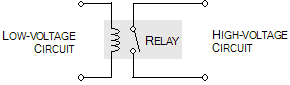
The advantage of a relay is that it permits a low voltage DC circuit to control a completely separate high-power circuit – for example a 240V AC mains electricity powered appliance.
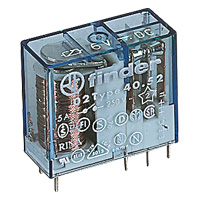
The example 6V relay pictured above could be triggered by a circuit powered by a small 6 Volt Solar Panel or 4 AA batteries, but used to control a 10 Amp 240 Volt appliance such as a large water pump, a fan, or even a large mains powered battery charger to top up a battery bank which has been excessively depleted.
NEW Click here to buy 6V and 12V relays in the REUK Shop.
Practical Relay Application Example
In this example we will look in brief at how a 240 VAC water pump can be used with a water butt in arainwater or greywater collection system.
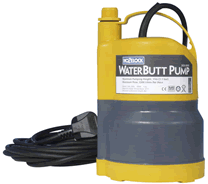
Ideally the switch to turn on the pump would be located near to where the water is used rather than at the location of the pump. If, for example, the water is to be used 30 metres away from the pump, it would be a pain (as well as a waste of power and water) to have to walk back to the pump to switch it on and off.
If a switch was fitted into the 240 Volt circuit and lay across (or under) the garden to the point of water usage, there would be a risk of electrocution if the cable was cut accidentally, and such [armoured] cable is very expensive.
Remote Water Pump Switch Relay Circuit Plans
As the schematic diagram below shows, a practical alternative would be to use a small solar panel(and/or battery) to power a small relay controlled by a switch. Runs of thin (cheap) wire carrying small currents at just 6 or 12 Volts could then be used to connect everything together safely along the length of the garden.
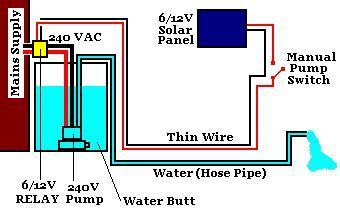
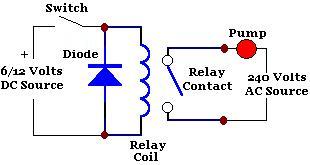
No details on the actual wiring of the 240V water pump are provided here since if you do not know how to do it already, you really shouldn’t be doing it! Mistakes with high voltage electricity can kill. If you are unsure of what you are doing, call in a qualified electrician for assistance.
NEW – If you are not experienced at dealing with electricity and/or soldering, have a look at this new article on Relay Boards – commercially manufactured circuit boards with make using relays much easier and safer for the inexperienced.
NEW If you are interested in using a relay to switch a high current (>10A) at low voltage, click here to read our new article on Automotive Relays.
Why Use a Diode with a Relay?

When a relay coil is switched off there can be a short-lived high voltage spike of electricity (aka back-emf) which can damage sensitive chips and transistors etc in the circuit. Therefore a diode is placed across the relay coil connections to suppress this spike.
Normally the diode does not conduct however, when the relay coil is switched off, any current which would otherwise have attempted to get through the coil is diverted harmlessly through the diode.