Wind Turbines are designed to take the energy of the wind and convert it into useful electricity – the stronger the wind the better usually. If the wind is too strong then a turbine can spin so fast it destroys itself with turbine blades ripped off, the alternator damaged by excessive heat, and damage to the turbine tower. Furling is one method of preventing a wind turbine from spinning too quickly simply by turning the blades away from the direction of the wind.
Furling can be achieved either manually (by the turbine owner himself physically cranking the turbine out and away from the wind), or automatically (with hydraulics and springs for example) with the goal of turning the turbine blade edges into the wind when the wind is dangerously strong and gusty.
Wind Turbine Furling
The simplest way of furling a wind turbine is a passive system in which the turbine is yawed sideways away from the wind as maximum power is reached.
Slightly more complicated and with more moving parts and stressed components weights are added to the tail and a sprung hinge to the point where the wind turbine alternator meets the mast. When the wind is very strong, it will blow over the turbine pushing it out of the wind. By adjusting the strength of the spring and the weights on the tail, you can fine tune the exact furling wind speed your require.
The larger and more powerful the wind turbine generator, the more complicated (and important) furling becomes. Some turbines even have motors on each blade to automatically turn them edge-on to strong winds.
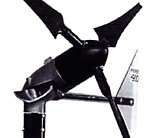
Above is a photograph (from CFCCREL) of a small wind turbine generator furled (turned) out of the wind. The direction of the wind can be seen by the position of the wind turbine tail – i.e. the wind is hitting the turbine at 180 degrees to the angle of the tail. The wind turbine blade edges are therefore facing the wind which is exactly what we want – the minimum surface area possible facing the wind, and the turbine not over-spinning.