The UK Government will announce on Monday (31st October 2011) their intention to slash the feed in tariff paid to owners of domestic solar photovoltaic installations which qualify after December 8th 2011 by over 50%.
NEW(January 30th 2012 Update) – Following protracted legal wrangling, the government appeal against a High Court judgement that early cuts to feed in tariffs (FITs) are unlawful has been thrown out. Therefore, pending a second appeal to be heard at the Court of Appeal existing levels of feed in tariffs – 43.3p per kWh generated – will still be paid for the next 20 years (with inflationary increases each year) for solar installations completed before 3rd March 2012.
NEW (March 23rd 2012 Update)The Supreme Court has refused to hear an appeal from the Government against its previous loss in court regarding its order to halve the feed in tariff. The Government’s problems stem from its ordering the cut a couple of weeks before the end of its own official consultation process. The court’s decision is that any installation completed before March 2nd 2012 will now receive the full 43.3p per kWh, inflation linked for the next 25 years. Installations completed after that date will now receive 21p per kWh still inflation linked, BUT the rate is now set to be slashed again in July this year to just 13.6p per kWh. Therefore the rush to install is likely to keep on through April, May, and June as homeowners try and beat the deadline to get maximum returns.
The Government estimate that paying 43.3p instead of 21p to the estimated 30-60,000 homes which installed solar panels between December 6th and March 2nd will cost an extra £45million per year for 25 years.
NEW (August 1st 2012 Update) As of today (1st August 2012) the feed in tariff for new domestic PV solar installations has been cut to 16p per kWh and the length of index linked payments reduced from 25 to 20 years. Going forward, the feed in tariff rate will be cut or held every three months with the decision made in response to the number of panels installed in the previous quarter.
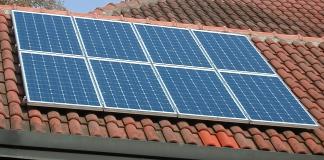
Owners of already qualified solar installations are currently receiving a tax free inflation linked 43 pence per kWh (unit) generated. They will continue to do so for 25 years as this is guaranteed. However, anyone who installs a new domestic photovoltaic solar array on their home which qualifies for the feed in tariff after December 8th 2011, will now receive the reduced rate of 21 pence per kWh* generated (still inflation linked and tax free). Homes fitted with solar panels, but which do not meet energy efficiency targets may receive an even lower tariff.
* they will actually receive 43p/kWh until April 1st 2012, and the new lower 21p/kWh rate for the remainder of the 25 year payment period.
The Government are likely to say that the reason for this cut to the tariff is that the global price of PV solar panels has falled considerably since the original tariff came into force and therefore at current prices people have been gaining tax free returns of around 10% on a typical installation (see our Feed in Tariff Calculator, with a system payback time of less than 10 years. The typical rate of return will now be back to the 4-5% originally intended before the fall in solar panel prices resulting in a much less attractive payback period of 15-20 years.

The result of this action is likely to be a reduction in interest in domestic solar installations in the UK by home owners who have access to the £10,000+ needed for a typical system, and slash the number of lower-income home owners who will be able to have solar panels installed for ‘free’ by companies which keep the tariff payments but allow the home owner to use electricity generated on their roof at no cost. It is also likely to cause chaos in the solar industry in the UK as home owners attempt to get their installations to qualify in the next six weeks before the tariff is reduced.
Relevant Articles
Solar Subsidies Cut by More than Half – The Guardian, 28th October 2011
Solar Power Subsidies Face Reforme – The Independent, 27th October 2011