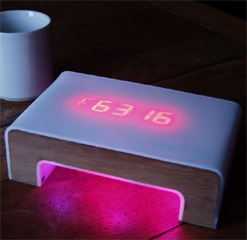
The Wattson is a stylish new energy meter from DIY Kyoto designed by three graduates of the Royal College of Art in London.
NEW This article refers to the original – now called Wattson 01 for a review of the new (Summer 2010) Wattson SilverLining, please click here.
Wattson Energy Meter
The Wattson is a souped up and restyled equivalent to the Efergy homeCO2meter and Electrisave.
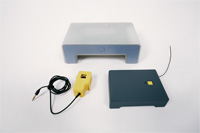
All three products use a electricity sensing device which is clipped onto a cable coming out of the electricity meter. That sensor is then connected to a battery-powered wireless transmitter which sends data to a display unit located up to 30 metres away.
Electrisave, Efergy, and Wattson can all display the current electricity usage in Watts, but whereas Electrisave and Efergy display equivalent daily carbon emissions and financial cost, Wattson displays the equivalent cost per year. Therefore, when the kettle is on, Wattson will display £3,000 – the amount it would cost if the kettle were left on for a whole year.
Wattson Display Unit
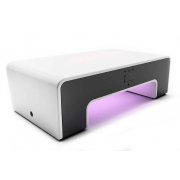
The Electrisave and Efergy display units are very plain battery-powered gadgets with a standard LCD used to present data to the user. The Wattson on the other hand is a beautiful object in its own right and makes a fascinating coffee table or mantlepiece ornament.
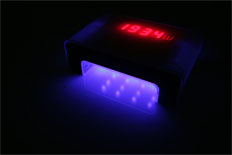
Electricity usage is displayed both as a numerical value on the top of the Wattson (as is standard with Electrisave and Efergy) but also using colours projected from the bottom of the device. When little electricity is being used the light is blue, moving through darker blues and purples until a lot of electricity is being used and the light glows red.
It is possible to select between different modes – display colours and numbers, display just colours, display just numbers, or an energy-saving low power mode in which the device continues to collect data, but it does not display numbers or lights.
Connect Wattson to a PC or Mac
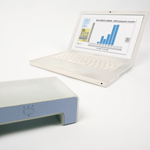
The truly innovative feature of Wattson is the ability to connect the device via USB to a personal computer or Mac. While the new Efergy model collects and stores daily data (and the soon to be released new Electrisave will do likewise), Wattson‘s computer linkup enables stored data to be transferred electronically and used to draw graphs of energy usage patterns and aid analysis.
Basic software is provided with Wattson to enable energy consumption to be plotted and analysed with ease. In addition the designers hope to build an online community of Wattson users who can compare energy savings.
Powering Wattson
The disadvantage of Wattson is that it draws up to 7 Watts of power itself necessitating a mains power supply and an adapter.
Electrisave and Efergy are completely portable since their display units are powered by a couple of AA or AAA batteries which last for months. Wattson however has to be permanently plugged into a mains socket, uses an inefficient adapter 24 hours per day which wastes energy as heat even when in low power mode, and trails an unattractive power cord. At £0.13 per kWh the Wattson would cost £8 per year in additional electricity usage if used in numbers and display mode constantly.
Wattson does have an inbuilt back-up battery, but this will only power the device for a few hours when it is unplugged. It is a great pity that Wattson could not have been designed to be far less power hungry and therefore could have been exclusively powered by a rechargeable battery.
Buy a Wattson Energy Meter
Click here to buy a Wattson Energy Meter now for just £79.95 (£149.50, £99.95) from Ethical Superstore.
A handmade limited edition is also available built to order using bamboo and acrylic for £350 and is available for purchase directly from the DIY Kyoto website.

More Information
For more information about Wattson click here to visit the official DIY Kyoto Wattson website.
REUK.co.uk reviews of both Electrisave and Efergy can be viewed here: Electrisave Review and Efergy Review.