A Float Switch is a device which is typically used to measure the depth/level of liquid in a container. As the water rises and reaches the level of the float switch, it begins to float going from the vertical to the horizontal. This closes an internal switch which can then be used to turn on/off a pump, alarm, relay.
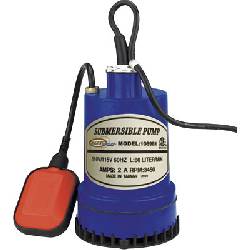
Pictured above is a submersible water pump with an integrated float switch (the red part). If a pump is run dry, it will quickly burn out – therefore, all good quality pumps are sold with a built-in float switch to automatically switch off pumping when there is no more water to pump.
Float Switches
A float switch can be as simple as a mercury tilt switch fitted into watertight floatable case. Since mercury is very toxic, a far more common alternative is to use a reed switch which is triggered by a small float-mounted magnet.
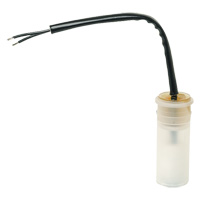
Pictured above is a typical automotive-grade float switch (available from the REUK Shop). This unit is supplied with a baffle which greatly reduces rapid multiswitching* caused by surface turbulence without the need for complicated electronics. This particular float switch can manage a switching current of up to 1.5 Amps – plenty to trigger a relay or a light/alarm. Typically float switch switching currents range from 0.5 to 2 Amps.
Click here to search eBay for Float Switch – there is usually a good selection available mostly marketed for use with bilge pumps, but which can be used in many other applications.
* See paragraph below on hysteresis.
Uses for Float Switches
Float switches can be set up to sense either rising or falling water levels – rising water to measure when a container is full or water has reached a certain maximum level, falling water to measure when a container is empty or has reached a certain minimum level. Therefore, float switches have many uses – particularly in renewable energy applications
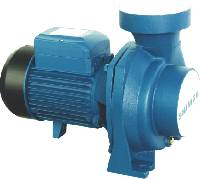
One example is rainwater toilet flushing. If a pump is required to get collected rainwater up to the toilet cistern from the main rainwater store, the pump can be automatically switched on when cistern is not full. This ensures there is always water ready in the cistern to flush the toilet when required.
This same technique can be used to safely fill a water tank in the loft so that there is decent (gravity-fed) water pressure for a shower, or the washing machine.
Another example is in garden irrigation. Water from a main rainwater/greywater storage tank can be pumped up to a smaller tank located near to a greenhouse or vegetable beds as and when it is required without the risk of overfilling.
Alternative to a Float Switch – A Liquid Sensor
Float switches contain moving parts and are therefore prone to breakage – quite often failing before the pump they are designed to protect. One alternative is to use a liquid sensor such as the example pictured below.
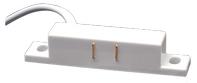
Two gold-plated metal probes can be seen fitted into the body of the liquid sensor. When both are submerged, the change in resistance activates an internal reed switch closing the contact and making the circuit. The only moving part in such a device is the reed switch reducing its chance of mechanical failure. This particulary (typical) example can handle a switching current of 0.5 Amps. More information about liquid sensors, their use and their limitations, is available in our new articleUnderstanding Liquid Sensors
NEW This Liquid Sensor is now available from the REUK Shop.
Simple Float Switch Circuit with Relay
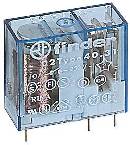
In most cases when using a float switch, the current required by the device to be switched on is in excess of the switching current rating of the switch. Therefore, a relay* is used such as the 6 Volt example pictured above (and sold in the REUK Shop).
* Click here to find out more about the use of relays.
Since a relay is being used, a low power source such as a PV solar panel with battery back up can be used for the water level sensing circuit. This can then be used to connect a high power source such as mains electricity or a battery bank to drive the pump.
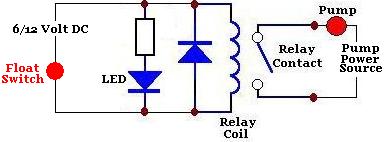
The circuit diagram schematic above shows such a relay-based solution to switching a pump off automatically when the tank to which it is pumping is full. A 6 or 12 Volt DC source (value chosen to match rating of the relay) powers the sensing circuit, and the pump has its own power source (typically 12VDC, 24VDC, or 240VAC).
When the (normally open) float switch is hanging in the air above the level of the water in the tank being filled, electricity flows through the float switch, and therefore through the LED (lighting up thatPUMP ON indicator) and the relay coil. That closes the relay contact connecting power to the water pump.
When the float switch starts to float on top of the rising water, electricity stops flowing through the float switch, the LED turns off, and the pump stops.
NEW Click here to view full details of the implementation of a simple DIY Automatic Pump Shut Off Circuit.
Hysteresis with Float Switches
If the water in the container is at all turbulent at its surface, the float switch may turn on and off repeatedly (multiswitching), potentially damaging a pump attached to it. Therefore a slightly more complicated electronic circuit can be used which introduces hysteresis – for example, when the pumpis switched off it could be made to stay off for at least 10 seconds, or the sensor/switch has to detect water continuously for 10 seconds before the pump is switched on.
NEW Click here to view our new article Water Pump Hysteresis Circuit to find out more about how multiswitching can be prevented using a simple time delay circuit.